
Guide
Dog Collar Size Guide: How to Measure Your Dog and Find the Right Fit
By Rakefet Yacoby-From 9 min read
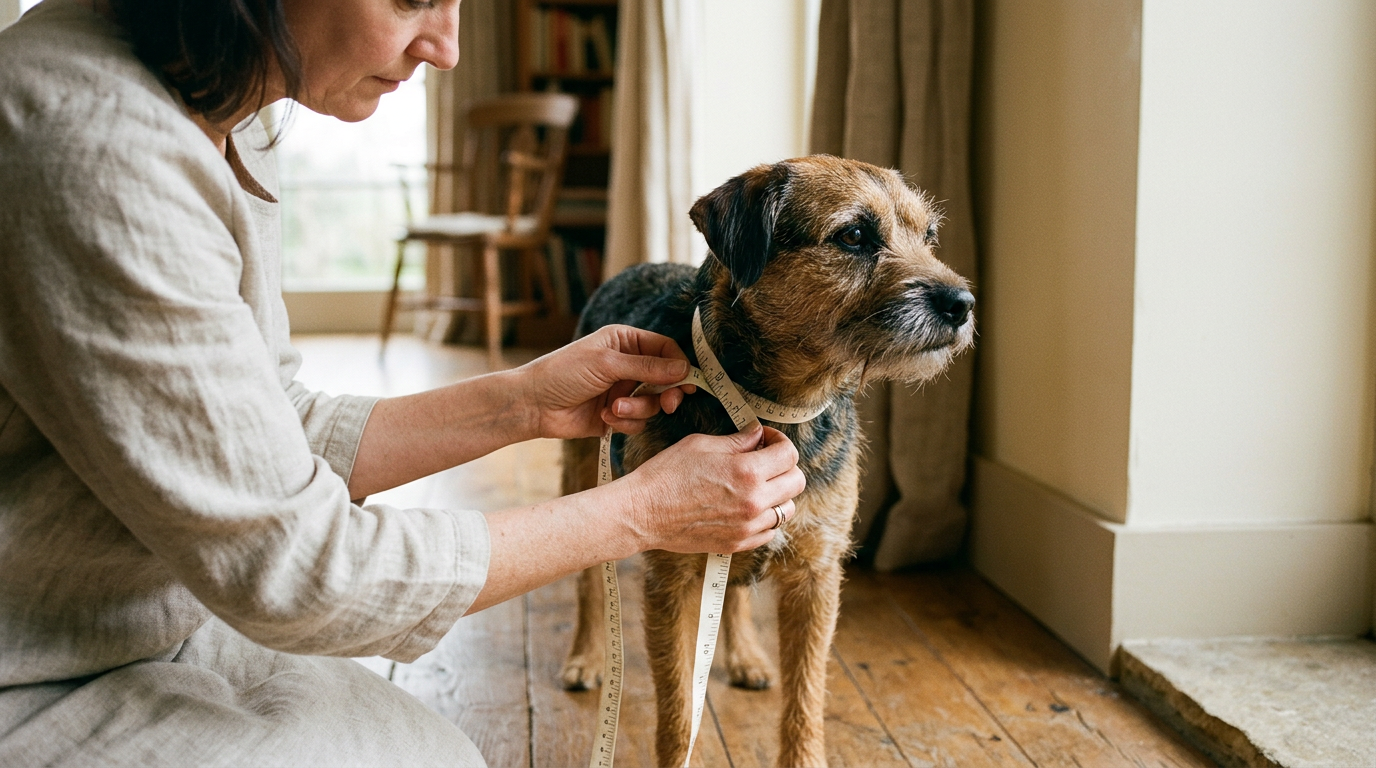
A collar can be beautifully made and carefully chosen, but none of that matters if the fit is wrong.
Too tight, and it may rub or feel restrictive. Too loose, and it may shift, catch or slip over the dog’s head. The good news is that finding the right size does not require knowing your dog’s “standard” breed measurement—or making a confident guess based on weight. It begins with one simple measurement: the circumference of your dog’s neck where the collar will actually sit.
This guide explains how to take that measurement, how to check the fit once the collar arrives and what to do when your dog falls between sizes.
01
What you need
You only need:
- A soft tailor’s measuring tape
- Your dog, standing naturally
- A note on your phone or a piece of paper
- The size chart for the collar you are considering
If you do not have a soft tape, use a non-stretch piece of string or ribbon. Mark where the ends meet, lay it flat and measure it against a ruler. Avoid using anything elastic, as it can give you a smaller measurement than your dog’s actual neck.
02
How to measure your dog for a collar
-
Step 1: Ask your dog to stand naturally
Measure while your dog is standing with their head in a comfortable, neutral position. Sitting, lying down or stretching toward a treat can change the shape of the neck and make the reading less reliable.
If your dog is unsure about the tape, let them sniff it first. Keep the interaction short and calm rather than trying to hold them still through a long measuring session.
-
Step 2: Find where the collar will sit
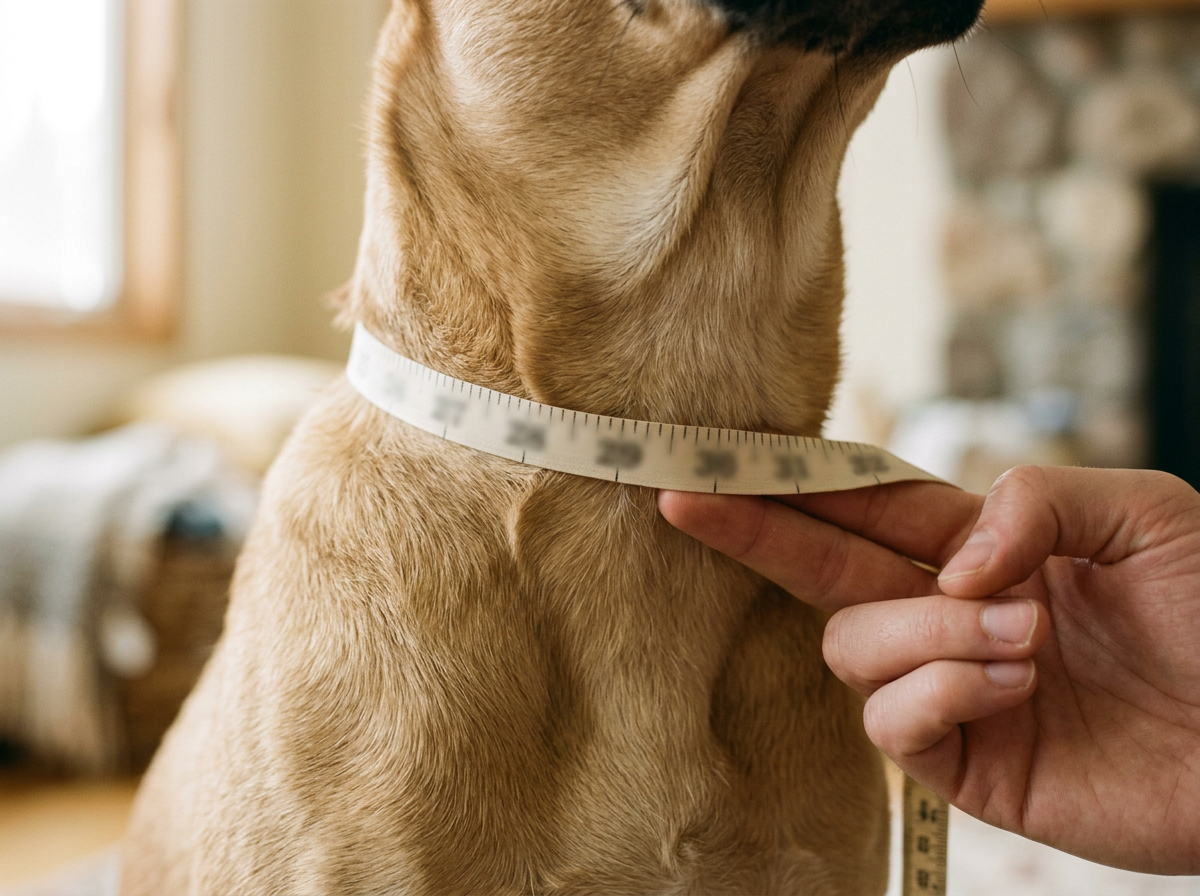
For a standard everyday collar, measure around the part of the neck where the collar naturally rests. This is generally around the lower or middle neck—not tight beneath the jaw and not so low that the tape drops onto the shoulders.
The exact position matters because a dog’s neck is not a perfect cylinder. Moving the tape higher or lower can change the measurement.
Different collar types may sit differently. A standard flat collar, martingale collar and head collar should not automatically use the same measurement method. Always follow the instructions for the particular product you are buying.
-
Step 3: Wrap the tape flat around the neck
Bring the tape around the neck without twisting it. It should rest against the coat without digging into the skin or dramatically compressing the fur.
Keep the tape level all the way around. If it slopes upward or downward, reset it before recording the number.
-
Step 4: Allow comfortable space
Many fitting guides use a two-finger check: there should be enough room to slide two fingers between the tape—or later, the collar—and the dog’s neck without forcing them. The purpose is to avoid both restriction and excessive looseness.
However, finger width varies, and some manufacturers describe the check differently for very small or very large dogs. Treat it as a final fit check, not a substitute for an actual measurement. The product’s own instructions should always take priority.
-
Step 5: Record the measurement twice
Take the tape away, let your dog reset and measure again. If the two numbers differ, take a third reading rather than averaging a careful measurement with an obviously inaccurate one.
Record the final neck circumference in both inches and centimetres if possible. This makes it easier to shop across brands without converting the number later.
03
How tight should a dog collar be?
A standard collar should feel secure without pressing tightly into the neck.
Once it is fastened:
- You should be able to slide the manufacturer-recommended number of fingers beneath it comfortably.
- The collar should not leave deep impressions in the skin or visibly restrict the neck.
- It should not hang far away from the neck or move freely over the dog’s head.
- The buckle, adjustment hardware and any attachments should sit without pinching or rubbing.
Run your fingers around more than one part of the collar. Checking only beside the buckle can be misleading if the collar or coat is sitting unevenly.
Then watch your dog move. Let them walk, turn their head, sit and lie down. A fit that seems correct while they are perfectly still may feel different in motion.
If your dog coughs, develops noisy breathing, shows discomfort or pulls hard enough that the collar places repeated pressure on the neck, stop and ask your veterinarian or an appropriately qualified trainer which walking equipment is suitable. A sizing guide cannot diagnose a health or handling issue.
04
How to read a dog collar size chart
Collar size names are not universal. A Medium from one brand may cover a completely different neck range from a Medium made by another.
Ignore the letter first and look at the actual measurement range.
For example, if your dog’s correctly measured neck is 15 inches, look for a collar whose stated adjustable range contains 15 inches. Ideally, the measurement should not sit at the extreme end of the range, because some adjustment in either direction makes it easier to accommodate coat and body changes.
Before ordering, check what the numbers mean. A brand may publish:
- The neck circumference the closed collar is designed to fit
- The usable adjustment range
- The collar’s total flat length, including or excluding hardware
Those are not interchangeable measurements. If the chart does not clearly explain them, ask the brand before purchasing.
Do not automatically add one or two inches to the neck measurement unless the brand specifically instructs you to do so. Some charts already build fitting room into their ranges; adding more can result in a collar that is too loose.
05
What if your dog is between sizes?
First, check whether the two size ranges overlap. An adjustable collar with your dog’s measurement closer to the middle of its range will usually offer more flexibility than one adjusted to its absolute minimum or maximum.
Then consider:
- Whether your dog is still growing
- Whether their coat changes substantially between seasons or grooming appointments
- Whether their weight is currently changing
- The collar’s width and overall proportions
- The manufacturer’s specific between-size recommendation
Do not simply choose the larger size if its minimum setting would still be too loose. Likewise, do not choose the smaller size if your dog’s measurement sits beyond its stated maximum.
When in doubt, send the brand your dog’s exact neck measurement rather than only their breed and weight.
06
Why breed and weight are not enough
Two dogs of the same breed and weight can have different necks. Age, build, coat, body condition and individual proportions all affect fit. Mixed-breed dogs make estimates even less dependable.
Breed examples can help you understand scale, but they should not replace a tape measurement. The most useful number is the one taken from the dog who will wear the collar.
The same applies to an old collar. Its labeled size can be a helpful reference, but sizing names vary among brands, and the material may have stretched or changed shape over time.
07
When to measure again
A dog’s collar size is not necessarily permanent.
Recheck the fit:
- Frequently while a puppy is growing
- After noticeable weight gain or loss
- After a major haircut or seasonal coat change
- When changing to a different collar type or brand
- If the collar begins shifting, rubbing or leaving marks
- Periodically as part of your normal collar and hardware check
Long or dense coats deserve particular attention. Measure close to the body without pulling the tape painfully tight, then recheck the real collar after grooming or seasonal shedding.
08
How to check the collar when it arrives
Do not remove tags or discard the packaging until you have checked the brand’s return conditions and completed a calm indoor fitting.
- Adjust and fasten the collar around your dog’s neck.
- Check the spacing beneath it according to the manufacturer’s instructions.
- Confirm that it cannot easily pass over the widest part of the head.
- Look beneath the collar for pinched fur or skin.
- Check the buckle and adjustment hardware from every angle.
- Let your dog walk and change position indoors.
- Recheck the fit after several minutes, once the collar has settled into the coat.
If your dog is between sizes or has an unusual neck-to-head proportion, contact the manufacturer, veterinarian or qualified trainer rather than relying on a generic rule.
09
Common dog collar sizing mistakes
Guessing from breed or weight
These can provide context but not an individual neck measurement.
Measuring the old collar by its total length
Buckles, overlap and adjustment hardware can make total collar length very different from usable neck circumference.
Measuring in the wrong position
Moving the tape closer to the head or shoulders can change the result.
Pulling the tape too tight
Compressing the coat and skin can produce a collar size that feels restrictive.
Leaving too much extra room
More space is not automatically safer. An excessively loose collar may shift or slip over the head.
Assuming every size chart works the same way
Always read the chart’s measurement instructions, even if you already know your dog’s usual size.
10
Frequently asked questions
Can I measure my dog’s existing collar instead?
Yes, if it currently fits correctly—but measure its usable closed circumference rather than the full end-to-end length. Fasten it at the hole or adjustment point your dog uses and measure around the inside. Confirm the result by measuring your dog’s neck as well.
Can I choose a collar size based on my dog’s weight?
Weight alone is not reliable enough. Dogs with the same weight can have very different neck circumferences and proportions.
Should I add inches to my dog’s neck measurement?
Only if the specific brand tells you to. Many sizing charts are already based on the dog’s neck circumference and account for adjustment in the collar itself.
What can I use if I do not have a measuring tape?
Use a non-stretch string or ribbon, mark where the ends meet and then measure it against a rigid ruler. Do not use elastic cord.
How often should I check a puppy’s collar?
Check it frequently. Puppies can grow quickly, and the correct interval depends on the puppy’s age, breed and growth rate. Make the fit check part of your regular routine rather than waiting for the collar to appear tight.
Is the two-finger rule always correct?
It is a widely used check for standard collars, but it is not a precise unit of measurement and instructions vary. Use it together with an actual neck measurement and the collar manufacturer’s guidance.
Measure the dog in front of you
A good fit does not come from a breed average or the letter printed on a label. It comes from paying attention to the individual dog—their neck, their coat, the way they move and the way the collar actually sits.
Measure carefully, read the size chart rather than guessing and check the fit again when the collar arrives. It takes only a few minutes, and it helps make an everyday object feel as considered as the relationship it represents.
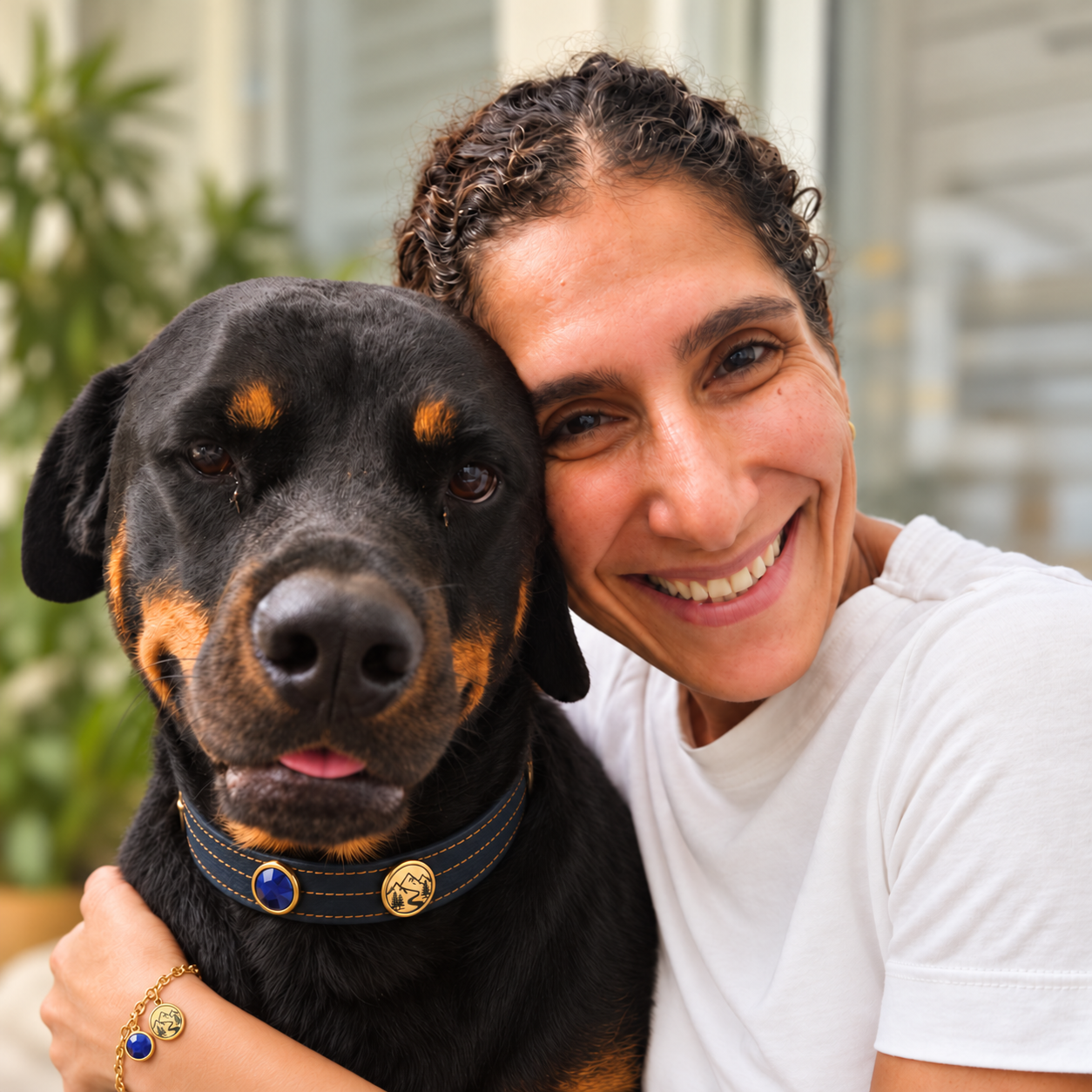
The Bond Set
One bond, considered in every detail
The Bond Set pairs a dog collar and collar charm with a bracelet and matching human charm—two pieces designed for different wearers, connected by one shared design.
Discover The Bond SetSources and further reading
- 1American Kennel Club — The Ultimate Dog Apparel Measuring Guide
- 2American Kennel Club — Finding and Choosing the Right Dog Collar for Your Dog
- 3Battersea Dogs & Cats Home — Train Your Dog to Wear a Collar, Lead or Harness
- 4VCA Animal Hospitals — Controlling Pulling on Walks
- 5PetMD — How to Measure a Dog
Filed under Guide Dog Collar Size Dog Collar Fit How to Measure a Dog